Saturday, 23 August 2014

Ballingstorp, Östra Göinge


BALLINGSTORP, Östra Göinge


Ballingstorp inner garden


We have several times paid attention to a road sign along route 19 on our way home saying "Ballingstorp 2" and a few times wanted to pay a visit to this old croft originally mentioned in the 16th century. Today we decided to visit the site and found a fantastic, cosy milieu two kilometers from the main road. The site was donated by the last farmer in 1953 to the local authorities that are preserving the place in its original condition. Unfortunately we could not enter the buildings but the surroundings gives plenty of interesting work for a photographer. 


A narrow path from the inner garden out to the fields.


The croft was leased to local farmers and the first farmer in 1532 was Trued Jennssön who provided the landlord with crop, firewood, peat and labour as rent. Bee-keeping, fishing and gardening were also important for the household. The present buildings, typical for this area, are mainly built in 18th and 19th centuries but part of the building timber is dated to the 17th century. 


Entry to Ballingstorp.


This croft site is rather big and offer plenty of details to photograph from different angles. We stayed about two hours on a sunny day. Mrs. T pointed out that there are two large tables and benches available for picnickers in these peaceful premises and this place is not far from us. She also tried out the pump for the well, without luck though.


View of the backside of the main building.


Above information is derived from www.lansstyrelsen.se and www.skaneshembygdsförbund.se and there is much more available e.g. about the construction technique and living in this croft over the centuries. A really beautiful site it is and something of a hidden gem.


Details of the croft and Mrs T investigating the situation with the well.


View from the road over the stone fence.


Thank you for sharing our interest in this wonderful site. The final picture is taken from the inner garden and reminds us that there are still summer days left before we enter the fall. If you visit the place you may be as lucky as Mrs. T to spot an eagle (kungsörn in tho case) close up. Unfortunately my camera was focussed on something else at that moment. 


Ballingstorp 23rd August, 2014. 


Tomorrow is the day for the AIR SHOW at Kristianstads airport. Weather forecast is promising acceptable photographing conditions so we hope to be back soon. Meanwhile, enjoy your week-end.


:-)


Thursday, 7 August 2014

Villands VÅNGA


In the surroundings of Villands Vånga


An old stone fence in the forests of Lerjevallen.


Up to now we have been very busy moving around Skåne getting to understand the differences in the regions and their activities. This time we are moving into a different world, away from mass tourism, in the Skåne wilderness near Vånga. A tip from Mrs. T made me look into what would be available in this region. Vånga itself is a small village in the Kristianstad municipality, beautifully located near Lake Ivo. The area is particularly well suited for growing fruits and berries but my attention was this time caught by two unusual sites nearby Vånga. They both have their own story to tell that might interest our readers, too. In the early 20th century, near Lake Lerje, existed a village called Spångabro that has since then disappeared and is now called the "The Dead Village". What happened to this village? The other site is a ravine called Kastagropen that is said to have a background with the so called snapphane-people during the Swedish-Danish wars in the 17th century. Both sites proved difficult to find as I had to rely on map-details (no road signs) and advice from local people as to the directions. Having said that, Skåneleden will carry you from Lake Lerje to Kastagropen if you are open for a physical challenge.


Lake Lerje and Lerjevallen with Spångabro


Lake Lerje and its surroundings.


Lake Lerje is a small lake in north eastern Skåne where Lerjevallen offer outdoor activities both winter and summer time. Cottages can be rented through Kristianstad municipality. On the northern slopes, among thick forest, existed the village of Spångabro. The remnants of the village is trusted to an organisation that now organize walks amidst the ruins of the village. Today I was on my own with an old map drawn by Rickard Nilsson showing the approximate position of the houses. Unfortunately all I could see was some old stone fences (see above). Where the village (consisting of some 40 buildings) had been, the forest have grown thick and a guide is most useful in order to find your way to the buildings or what is left of them. Seems that the village was desserted because making a livelihood become more or less impossible. People lived in simple dwellings built by their own hands, worked hard for their living and often had to walk long distances to carry out their duties and sometimes all the way to the city of Kristianstad.  "Väva-Anna" did weave all her life, "Stava-Per" was the tailor and "Örn-Ola" the butcher. People worked as laborers in the nearby farms. "Löne-Sven" once walked tired home and had to have a rest walking uphills. The story says that he fell asleep "but woke up early enough to make his way to work next morning". These stories and more have been written by Rickard Nilsson and published in Kristianstadsbladet 17th November, 1960. 


An overnight resting place along Skåneleden at Lake Lerje.


I followed Skåneleden a short distance but as it was about 6 km to Kastagropen, and 15 km to the next resting place, I decided to return to the car and drive there via Vånga. 


Kastagropen 


Advice to new visitors. Follow the road to the tree line and look left. 


My first attempt to reach Kastagropen failed as the road I had taken thinned out to become a narrow path and then soon finished in a dead end. The road was the correct one, but the ravine of Kastagropen was nowhere to be seen. Best to return to the village and ask for advice! I was kindly offered another more detailed map and the route was verified. The advice was: "Park the car at the end of the path and walk the last bit". The above pictures offer a view of the area where one has to abandon the car (behind the bushes). There is enough space for a small car to turn around for the return trip. The electric lines make a good landmark and are marked on the map, too. Then move through the bushes and look left for a narrow road (guides say it's from medieval times) that runs through the ravine. If you, like I, take the wrong turn you may end up facing a "wall" of birch trees - do not try to penetrate but return the same way to the main road. Follow it and keep your eyes on the left hand side where the ravine soon will appear. Another piece of advice: If you do as I did (left the car door open for some time) you will get a herd of flies in your car. Not recommended!


WHAT IS Kastagropen? It is a ravine in a beech forest. During the rainy season a stream runs through the valley but summer time it dries out. WHAT IS a Snapphane? This is the name of a person (bandits, laborers or forces) that counteracted on Swedish groups during the Swedish-Danish wars in the 17th century. Most of  them lived in Skåne that belonged to Denmark for 600 years. The reasons for counteracting on the Swedes are many and different Snapphane groups operated in different ways for different reasons. All in all the Swedish government regarded them something of soldiers of guerrilla war fare and executed many to set an example. Stories tell that some where hanged in KASTAGROPEN. For me this ravine with its dense forest offered a fantastic playground for practicing my camera on light and shadows and offer different kind of photographs - some of which are best in black&white or sepia. 


Tried as B&W but best in natural colors.

This one in sepia.

General view in B&W.

Dry season!

Light early in the day.

Light conditions in late afternoon.

Plenty of interesting details.


An entirely different world, isn't it? And still only a short drive from main cities and airports. Plenty of photographic angles to discover - while sitting on tree stump consuming an afternoon snack. Well, I wanted to try to find an abandoned village and saw at least stone fences. On the way back to pick up Mrs. T from work I passed an abandoned house that was just the perfect target for an HDR photo (below). Makes interesting pictures, HDR.


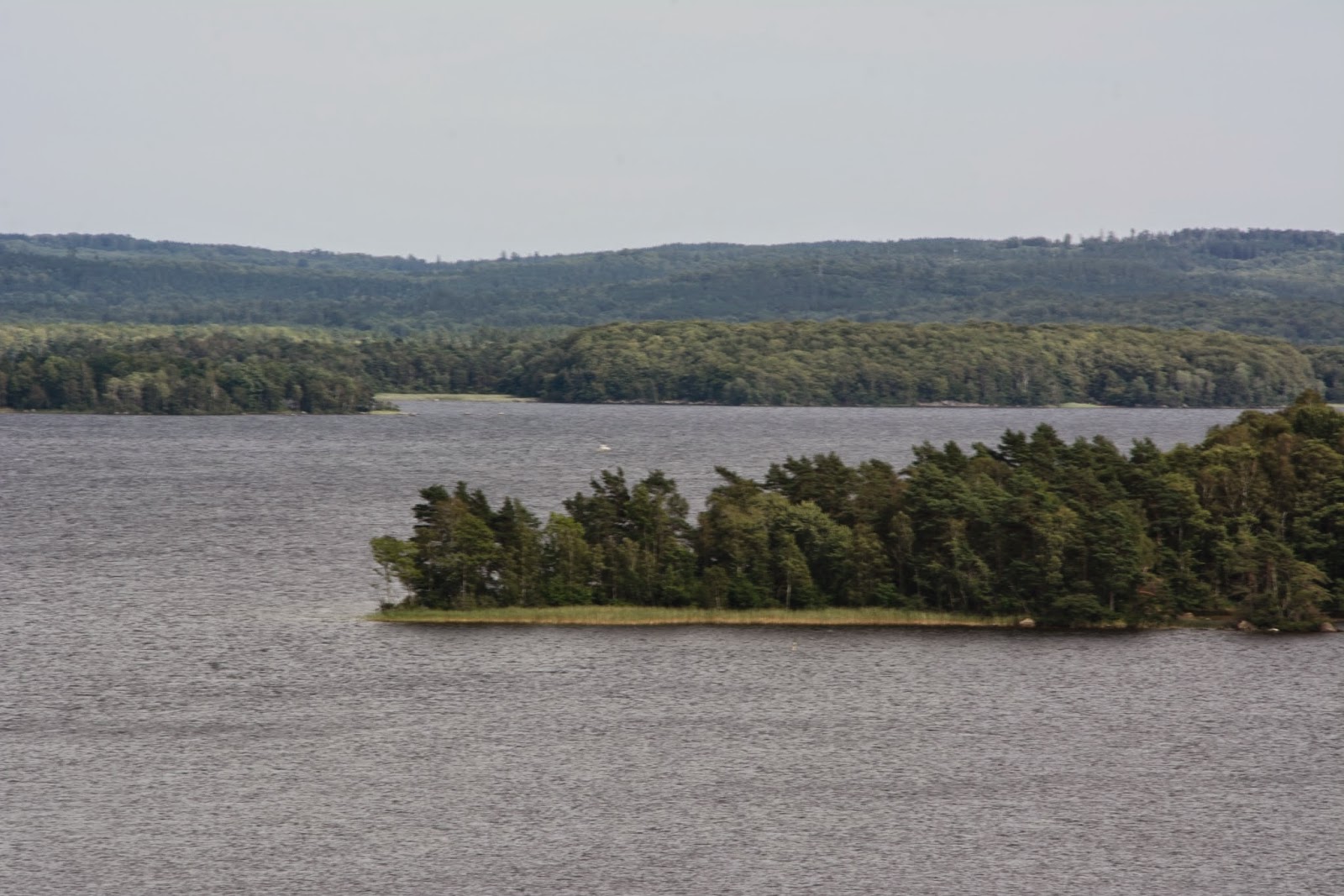
And a final view over Lake Ivo before leaving the area.


An interesting and a DIFFERENT day out today. How do you like the pictures? Hope you all have a great week-end coming up!


:-)


Monday, 4 August 2014

Visitor Programme 1


Arrive in Copenhagen - VISIT SKÅNE


National Aquarium in Copenhagen.


Everyone knows that Copenhagen is a major airport hub but few come to think of that SKÅNE is only across the bridge of Öresund - with direct access from the airport. If you are in for a break in Scandinavia / Copenhagen why not combine this with a visit to Skåne. Opportunities are numerous from magnificent golf courses to cultural events and natural beauty in a tranquil setting along the entire shoreline - the selection is yours. The program for our cherished young quests this time was:

Day 1: Copenhagen sightseeing
Day 2: Hässleholm Museum and the Zoo of Skåne (Höör)
Day 3: Åhus Eel festival, Forsakar and Havängen Nature Reserves 


Day 1: Copenhagen

The famous Nyhavn in Copenhagen.

Our quests, Mr. T Jr. and his fiancée Ms. S, landed early at Kastrup airport so when we arrived they were ready to go. Train connections to the city centre are frequent and we purchased a 24-hour pass. The prescheduled preliminary program was abolished as our quests also wanted to visit the National Aquarium that we had not been to either. Opposite the railway station is a useful Visitors Centre that provided us with details on how to get there and other information. If you really do not know what you want to do on a specific day, go to this centre and shop for ideas. We once picked up the idea of taking a coastal train to the picturesque city of Helsingör in Northern Sealand (see the blogpost on the Region of Öresund). 


Copenhagen by sea.


From the Visitors Centre a short walk through Ströget, the shopping street, takes you to Nyhavn that in itself offer photogenic scenes. After a stroll along the canal we choose one of the sightseeing service providers for a one hour tour in the harbor area and the canals. The tours are more or less the same with different service providers but differences do occur. On our tour we missed out the old war time Torpedo Boat sheds that now have been renovated for other uses and interesting to see. After the cruise considerable time was spent in one of the restaurants at Nyhavn. After some reconnaissance we found a restaurant that offered traditional Danish Smörrebröd (sandwiches). This went well down with local schnapps and beer. We then got up, walked a short distance to the Metro station of Kungens Nytorv to catch "the tube" directly to the Aquarium at Kastrup, near the airport. 


The colorful National Aquarium of Denmark.

The award winning architecture of the Aquarium is spiral-like offering different programs; the lakes of Africa, the rainforest, the ocean and its coral reefs and much more. From the terrace you can also spot the the bridge of Öresund at a distance. For daily programs see their website denblaaplanet.dk With this visit the day was full and we returned to our car at Kastrup airport to drive home for a pasta dinner.


Day 2: Hässleholm museum and the Zoo of Skåne


Hässleholm Museum (of transportation)

Mr. T Jr. is interested in military vehicles and seems to possess some information related to these. On our way to the Zoo we therefore stopped at the Hässleholm museum that display different kind of historical vehicles be it military, fire protection or old carriages. We had an hour to take pictures, mostly in HDR, of the military vehicles, and details of them, this time. The fire engines were presented in our earlier blogpost. During the last Saturday of August the Museum organizes a big gathering for military vintage vehicles and reenactment (www.mollerod.se). The ladies preferred to use their time shopping and were picked up for the continued journey. 


The Zoo of Skåne in Höör.

The Zoo of Skåne is specializing in Nordic species and, with some 75 of them, is largest of its kind in the world.  Mammals like otter, wolf, bear, wildcats, fox, lynx, elk, deer, wild boar and many more can be seen. Besides their daily (feeding) programs it is possible to prebook a close encounter with some animals and also organize special activities like tree climbing. 

Before this day was over we spent the evening in the city of Åhus and the Pråmen restaurant enjoying salmon, pulled pork and fantastic desserts. We drew through Kristianstad to show our quests the city and what it had to offer.


Day 3: Eel festival at Åhus and Nature Reserves at Forsakar and Havängen.


Forsakar beech forest.


The Eel Festival

The Eastern cost of Skåne is known as the Eel coast where eel still today, in a smaller scale, is fished using special nets. Åhus and the surroundings are known for their Ålagille (Eel-partys) and a special Eel festival is organized early August every year when selected Ålabodar (Eel huts) offer eel for tasting accompanied by musical programs. We wanted to get a taste of this event and joined the crowd at Åhus market place for the coronation of the Eel King of the Year and after that visited one of the huts called the New Revhakeboden to taste smoked eel. 


Promotion of the Eel festival. One of the simple eel huts and a net drying up in the wind.


Forsakar Nature Reserve

Forsakar was also described in a previous blogpost and this, together with Havängen, were the highlights of the program this time. Also Mrs. T was amazed of the area of Forsakar that seemed to take us into a wilderness with its dense vegetation and the water falls. The above picture was taken at the initiative of Mrs. T and I have to give her credit, again, for her eye of the beautiful. It is possible to climb the water falls and our guests wanted to do so. 


Forsakar water falls during the dry season.

Finding and getting into Forsakar is very easy and the experience so stunning that one visit does not seem enough. Distance to walk is short and the path easily approached with photogenic scenes all around it. All in all this part of Skåne in Degeberga, Brösarp and Kivik has much to offer. We now only had time for the natural beauty at Havängen, a short drive from Forsakar. 


Enjoying ourselves at Havängen Natural Resort, Eastern Skåne (tents only suggestive activity).


With the visit to Havängen the day was coming to an end and as the windy conditions did not tempt anyone for a swim we returned north to Östra Göinge and home base where meat balls "à la Mrs T" was waiting for us. The three days where packed with program and as often is, the best of it tends to come last. We utterly enjoyed the visit of too rarely seen quests and welcome them soon again as Skåne has so much more to offer.


Arriving by flight to Copenhagen and, in this case, returning by train to Stockholm and the ferry boat to native Finland.


Hope you have enjoyed our three day program as much as we have. If interested in the activities in Skåne do visit the website www.visitskane.com for events and happenings. Our own blog will give you some ideas of exciting places to visit if you come this way.

Take Care and All the Best!


:-)


Tuesday, 29 July 2014

Wittskövle, Forsakar, Baskemölla


WITTSKÖVLE CASTLE


Wittskövle - a renaissance castle from the 16th century.

Todays excursion was more easy going compared with the earlier full day programs. A visit to Wittskövle Castle, Forsakar Waterfalls and the small village of Baskemölla filled in some gaps from previous tours south of Kristianstad.


Wittskövle Castle is privately owned and with its 100 rooms the largest of the castles in Skåne. It was constructed as a defensive post with two towers from where the canon fire could reach all the roads (Wikipedia). It is today run as an enterprise engaged in agriculture and forestry. The castle itself is not open to public but the elegant garden can be visited.     www.widtskofleab.com


Wittskövle Castle surroundings (partly in HDR format)


FORSAKAR WATER FALLS


Following a stream in the small ravine with beech trees will lead you to the lower water falls of Forsakar.

The Forsakar Nature Reserve is situated close to the city of Degeberga in Kristianstad municipality and is very easily accessible from route 19. Parking is arranged at Forsakargården (manor) and a path was built to follow the small stream flowing through the 40 meters deep ravine. This short walk takes one through a beautiful beech forest. The upper falls can be reached through another path on the ridge of the ravine - this route is about 2,5 km's long but easy to follow, too. The upper fall has a free fall of 7,4 meters and the lower 10,6 meters and water flow varies from season to season. 


Left the lower section of the water falls and right the upper section.


BASKEMÖLLA


Stony beaches at Baskemölla.


Driving further south towards Simrishamn will offer several opportunities for a stop; the small villages of Vik and Baskemölla two of them. Baskemölla (230 inhabitants) has a past as a milling and fishing community with its heydays in the early 20th century. Now many houses have been turned into summer residences and tourism is the main industry. The village is beautifully located on the slopes towards the sea and it has a small harbour. Every year during easter an art event called KONSTRUNDAN is organized where all artists from the eastern part of Skåne are invited. Tjörnedalagården is the focal point in the sense that they all display one of their works in this particular house (pictures below).


Baskemölla and Tjörnedalagården.

I enjoyed a very nice day out in the countryside and particularly appreciated the Forsakar environment. It is very easy to access so do not drive past if you are in the area. Hopefully we can take our son and his fiancée there this week, too. Visits to Wanås, Kristianstad and Åhus with its surroundings will take place. A special Ålagille-event with eel-tasting also lure us so we look forward to a very nice week-end with more pictures to follow. Temperatures should drop slightly from the present mediterranean levels - have not had a swim in the sea yet, but was very tempted at Baskemölla.


Do you like home made bread? Mrs. T is also skilled at "crafting" our own bread that CONTAINS OLIVES and tastes like MAGIC. Recipe? Not to be found in any shop!


Enjoy the sunshine and the odd cold beer with your bread!


:-)


Thursday, 24 July 2014

LUND - Rome of the North


LUND - Academics, History, Design and Science


The University of Lund, founded in 1666, has eight faculties.

Lund has an active scientific role also in the entire region of Öresund.

When Mrs T and I was studying in native Finland we had a certain interest towards Skåne or southern Sweden. The area was tempting to us and we considered moving there. I remember applying for jobs at Tarkett and Mölnlycke at that time. It took us 30 years to get here, but here we are....now visiting the City of LUND for the first time as we had some business to attend to there.  An excellent opportunity to combine obligations with pleasure. After a vivid discussion whether to take the train or go by car the "pretend-to-be-four-wheel-drive KIA" was chosen. The train however is an excellent alternative with a frequent, fast and inexpensive journey starting from Hässleholm. Next time, darling! My plan was, while Mrs. T was on her duties, to visit the City Park and then return to the city center in about an hour. Mrs. T waited for long to see the exhibition of Mrs. Gudrun Sjödén who is designing and producing colorful clothes and textiles for the home. Secondly we wanted to explore KULTUREN, the open-air museum and visit the Cathedral.


For the sake of curiosity an old Map of Lund (source Wikimedia Common).

We left early in the morning (means nine o'clock to us) and arrived on time to Lund that seemed quiet with all 40.000 students gone. We passed Ideon Science Park that hosts 350 companies and employes 2700 people. The University of Lund has an active role in this Science Park but also contributes with its strong research towards Medicon Valley. And while I am on it, the University has a stake in a holding company LU Bio, too. This started as a joint venture with private investors that wanted to support  research spin-offs within Life Sciences. This kind of operations have been rather successful in Sweden and, thus, gives reason for admiration. But that's it on Academics and Science.


The City Park


The park on a hot-hot-hot summer day!

Also the park seemed quiet this morning. It is sizable and no doubt popular for jogging. Mrs. T asked if that's me in the hammock but no, that's not me this time. I would not have known how to get into one of those and probably found myself grounded in a horisontal position if I did try. Colour of the water? The light playing its tricks!


Gudrun Sjödén at KULTUREN

Reading her website turns me on. In 35 years she has created a global business with an annual turnover of SEK 0,5 billion with her own shops in both Europe and the US. She has gained royal recognition and many other awards during her career. Her thoughts on clothing design are outstanding. In its simplicity it is about natural material and sustainable Nordic design language. If you look under the surface she uses words like: colorful strips, no seasonal dependance, functional and unique without a sense of time, suitable for all ages and figures....and so on!!!! AN OUTSTANDING PERFORMANCE - nothing else.


Mrs T getting ready for the tour of Sjödéns exhibition.

Observant and appreciative for the meeting with Sjödéns design.


KULTUREN Open-Air Museum


The Association of Cultural History for Southern Sweden.


Some of the houses are brought from other parts of Sweden. Top pictures: a nobleman's house.


The open-air museum of Kulturen is right in the middle of Lund and displays the old division of the past society into four estates: nobles, clergy, burghers and peasants. Inside the buildings collections of cultural history, art, crafts and design form several exhibitions from local culture to world culture or medieval times to modern ages. The urban settings cover buildings from the middle ages to the twentieth century and the rural buildings are from the 17th to the 20th century.


This wooden church is from Boseby and dated to 1652. The vicarage, bottom right, is of 18th century origin (V Vram).


A professor's home from mid 19th century (grey house on the left).


The Cathedral of Lund


Lund was a religious centre during the middle ages and a spiritual capital for Denmark who ruled over Scania until 1658. Lund was then called Metropolis Daniae and Rome of the North.  King Canute (the Holy) started to build a bishop's church in 1080 and the Cathedral of Lund we today see is described as the "finest example of Romanesque architecture in Scandinavia" and it is made of sandstone.  


Inside the Cathedral of Lund.


The pulpit (left) is from 1592 and the altarpiece from 1398. The astronomical clock in the church is from 15th century and  it is still operational.


The Cathedral of Lund (pictured in HDR)


Returning Home via Bosjökloster


The day in Lund gave us the chance to learn directions and distances and to visit some of the key sights. We knew to expect to meet a historical and academic city and it was nice to see it all in real time. This was the first visit but surely not the last.

Before leaving the city we had a break in a nearby coffee shop. Coffee and ice-cream for Mrs. T and a SMOOOTHIE and ice-cream for me, because I felt I needed something cool on a hot day. We had our ice-creams. They where OK - I think!? BUT MY SMOOOTHIE WAS NOT!  Wonder if it was made of sour milk or yoghurt or something similar? I forced  this drink down while Mrs. T was purchasing a pair of red Capris - (Does this mean that she is totally "royalized" now?)


Bosjö Abbey and its 1000 year old Oak tree and herbal gardens.

We have described Bosjö Abbey in another Blog Post. A perfect place for a walk with a picnic perhaps. They have a great sculptural exhibition this summer and the classical concerts are starting in August. Nicely located by Ringsjön with a lovely garden.


Hope you liked the visit to ancient Lund - we did! 
Have a sunny an warm week-end all of you!


:-)